
Fertilizer Rundown: What to Use, When to Apply It, and What NPK Means
Discover the best fertilizer options for Florida lawns, plus guidance on choosing the right products for your lawn care program.

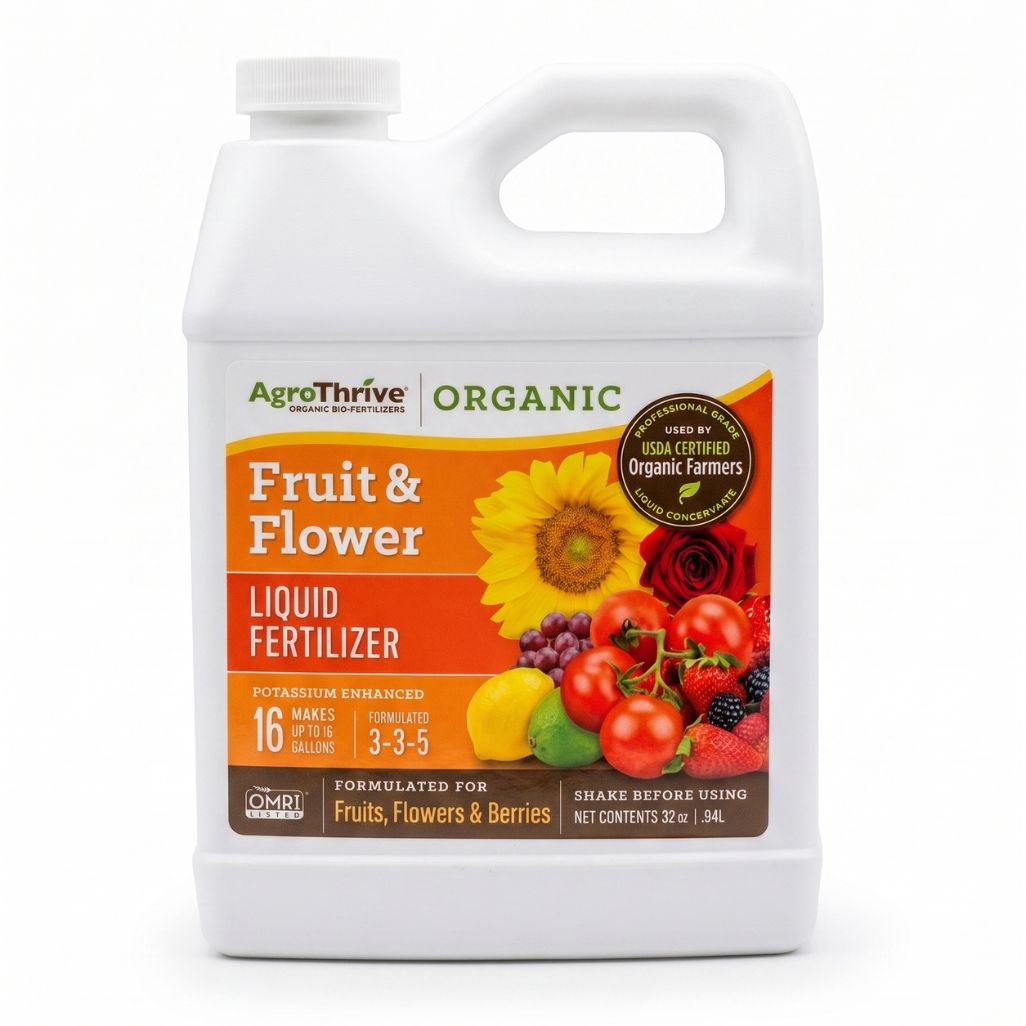
Most fertilizer advice you find online gives you a generic schedule and calls it a day. Apply every two weeks. Use it monthly. Follow the label. But after years of working with lawns, mango trees, and home vegetable gardens here in Florida, we’ve learned that frequency isn’t really the right question. The right question is: what is your plant actually telling you?
Before we talk about how often to apply liquid fertilizer, it helps to understand where it fits in your overall fertilization strategy. We think about it this way: granular fertilizer is like rainfall, and liquid fertilizer is like irrigation.
Rainfall does the heavy lifting. It’s consistent, broad, and foundational. But when things get dry — when the plant needs something right now — you don’t wait for rain. You irrigate. Liquid fertilizer works the same way. Your granular fertilizer should be doing the bulk of the nutritional work throughout the season. Liquid fertilizers and micronutrients are there to supplement, to respond, and to treat specific deficiencies when you spot them.
This framing changes everything. Instead of asking “how often should I apply liquid fertilizer on a schedule?”, you start asking “what does my plant need right now, and is liquid the right tool to deliver it?”
There is no universally correct frequency for liquid fertilizer applications. Anyone who tells you to apply it on a fixed schedule without looking at your plants is giving you generic advice, not good advice.
The approach we rely on is simple: look at your plants. They will tell you when something is missing.
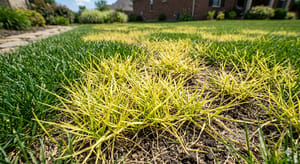
Turfgrass is one of the more expressive plants when it comes to nutrient deficiencies. When your lawn blades start to yellow or take on a pale, washed-out appearance — even when you’ve been applying a quality granular fertilizer like a 16-0-8 — that’s a signal worth paying attention to. A uniform yellowing across the lawn often points to nitrogen or iron deficiency.
We recently worked with a client whose turf was showing exactly this pattern. They had been applying granular fertilizer consistently, but the grass wasn’t responding the way it should. After diagnosing an iron deficiency, we recommended a liquid foliar iron application. The response was almost immediate. Within days, the color returned and the turf recovered well. That’s the power of liquid fertilizer when used correctly — it’s absorbed directly through the leaf tissue, which means the plant can take it up and use it right away.
Mango trees are another great example. Their leaves are incredibly communicative if you know what to look for. Older leaves showing yellowing between the veins often indicate a magnesium deficiency. Leaf curl, weak fruit set, or poor color development might point to potassium or calcium issues. When you see these signs, a targeted liquid application of the appropriate micronutrient can address the problem far faster than waiting for a granular product to break down and work its way through the soil.
Home vegetable gardens tend to cycle through plants quickly, and deficiencies can show up fast — especially in containers or raised beds where nutrients can leach out more readily. Pale new growth, purple-tinged leaves, or slow development are all signs that your plants may need a supplemental liquid feed. A well-timed liquid application can get a struggling plant back on track without skipping a beat.
The most common mistake we see is relying solely on granular fertilizer and never reaching for liquid at all. Granular products are foundational and essential, but they aren’t designed to be a rapid-response solution. If your plant is showing a deficiency, it needs something now — not in three to four weeks when the next granular application breaks down and becomes available.
The other mistake? Assuming liquid fertilizer will burn your plants. This concern stops a lot of people from using these products when they should. The reality is straightforward: as long as you follow the labeled rate, you will not burn your plants. Fertilizer burn happens when products are applied in excess. Stick to the label, and liquid fertilizer is a safe and highly effective tool.
So how often should you actually apply? Here’s how we think about it in practice:

In all cases, your granular fertilizer program should be driving the season. Liquid fertilizer is your tool for fine-tuning, troubleshooting, and rapid response — not your primary feeding strategy.
Liquid fertilizer is most valuable when you treat it as a precision instrument rather than a routine product. Build a solid granular program, learn to read what your plants are telling you, and use liquid applications to respond when they need something specific. That combination — observation, diagnosis, and targeted treatment — will get you better results than any fixed schedule ever could.
When your turf is pale, check for iron. When your mango leaves are signaling a deficiency, treat it. And when you reach for a liquid product, follow the label and trust the process. Your plants will respond quickly, and you’ll start to see fertilization less as a calendar task and more as a conversation with your garden.

Discover the best fertilizer options for Florida lawns, plus guidance on choosing the right products for your lawn care program.
If you’re growing Bermuda, St. Augustine, Zoysia, or Bahia grass here in the Tampa Bay area, the question “when should…
Florida’s heat, humidity, and relentless summer storms create the perfect breeding ground for turf pests, making proactive pest control essential…