What’s the Best Time of Year to Fertilize a Lawn? (A Tampa Bay Guide for Warm-Season Grass)
If you’re growing Bermuda, St. Augustine, Zoysia, or Bahia grass here in the Tampa Bay area, the question “when should…

As a lawn care operator in Florida, you know that choosing the right fertilizer can make the biggest difference in turf quality for our most common turf varieties; St. Augustine, Bermuda, Zoysia, and Bahia. Getting this right means better customer retention, fewer repeat visits, and a stronger bottom line each quarter.
But getting this just right across dozens of your accounts means understanding each option, knowing how it should be applied, and most importantly, how each choice fits into a larger program.
In this guide, we’ll cover the fundamentals of fertilizers and tie those to the direct brand choices we carry, so you can find the best products to match your clients.
Florida’s unique climate puts turf through certain extremes that LCOs in other states never have to deal with. Sandy, low-CEC soil can make the application of fertilizer difficult to time correctly, resulting in callbacks or wasted product.
The real difficulty comes when managing dozens of lawns, each with its specific requirements. While the climate affects them all similarly, each can have specific soil requirements, irrigation timing, and even fertilizer restrictions depending on the location along your routes.
All of this creates a complex puzzle that LCOs have to solve with minimal margin for error.
However, the reward for getting this puzzle right immediately sets your operation apart from local competitors, and leads to better turf, higher customer retention, and cost savings due to less wasted product.
With our 40 years of experience in the area, we offer a wide variety of products that are curated to deal with the unique scenarios you’ll face on your Florida routes.
From production-volume granular applications to precision liquid supplementation, here’s how our main product categories break down:
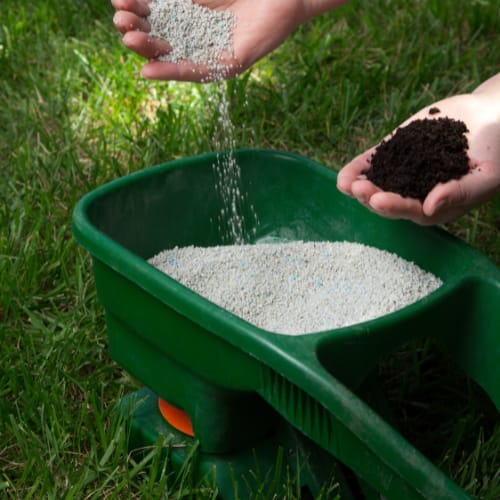
Granular Slow-Release: For high-volume residential routes, a granular lineup gives operators a proven option in commercial bag sizes.
If you need reliable nitrogen delivery without phosphorus loading, 24-2-11 and 20-0-10 are strong choices for established warm-season lawns. For mid-season, 16-0-8 and 28-0-12 are solid.
For situations where some phosphorus is appropriate, like areas with new plugs, FL Turf Special 16-4-8 is a great choice.
Liquid Fertilizers (Dynazone, DynaFlo, Earthstrong): LCOs choose liquid options for their speed and flexibility. Dynazone 18-0-9 is a high-nitrogen, zero-phosphorus liquid option that’s perfect for spray applications on your St. Augustine and Zoysia accounts.
Another option is DynaFlo 15-0-0 6 Iron, which delivers nitrogen plus iron in a single pass. This makes it highly efficient for color correction on your alkaline-soil accounts.
If you’re dealing with struggling turf in high-profile areas, Earthstrong Augusta and Earthstrong Augusta Max are premium biostimulant-enhanced liquid products that support root development and stress recovery, while DynaZone N26 provides a strong liquid nitrogen option for quick, efficient feeding.
Iron and Micronutrient Products: One common complaint LCOs hear from clients is color problems, which are sometimes caused by iron deficiencies due to soil pH and iron availability. Foliar options provide the fastest results when quick green up is needed, and DynaGold Iron and Earthstrong IronMan are both designed to address this need.
If you need broader micronutrient coverage, Miller Microplex can be used as a foliar or soil application with added micronutrients to address secondary and trace deficiencies often present in Florida’s high-pH soils. Soar Micronutrient Mix is another strong option for supporting turf health when micronutrient deficiencies are impacting color, growth, or overall performance.
If you have accounts with St. Augustine turf that’s exhibiting interveinal chlorosis, DynaGreen Manganese is particularly useful for targeted treatment if you’ve already dealt with any iron deficiencies.
Organic and Bio-Based Options (Milorganite, AgroThrive, BioVive): If you service clients who request organic treatment, we carry several effective options. Milorganite is one of our popular slow-release options for operators who want predictable results with minimal burn risk.
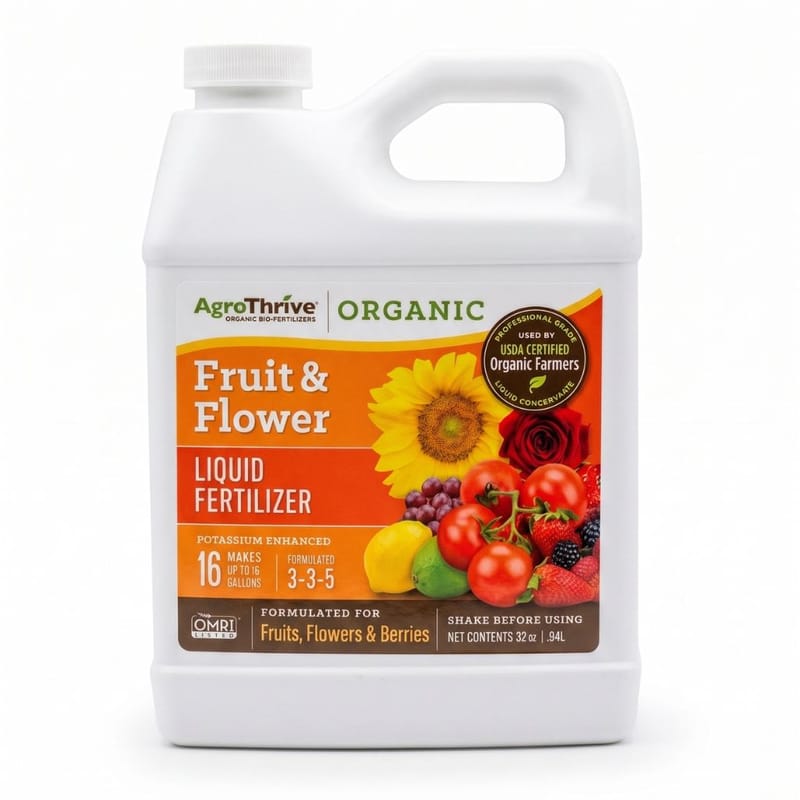
AgroThrive LFK is a liquid organic option well-suited for fertilization or spray applications, and BioVive brings a biological component that supports soil health over time.
Potassium Products: For accounts where increasing potassium is the main objective, Earthstrong Harbor K and Rebound 15-0-30 can be used for fall and summer potassium programs, post-stress recovery, and drought tolerance support.
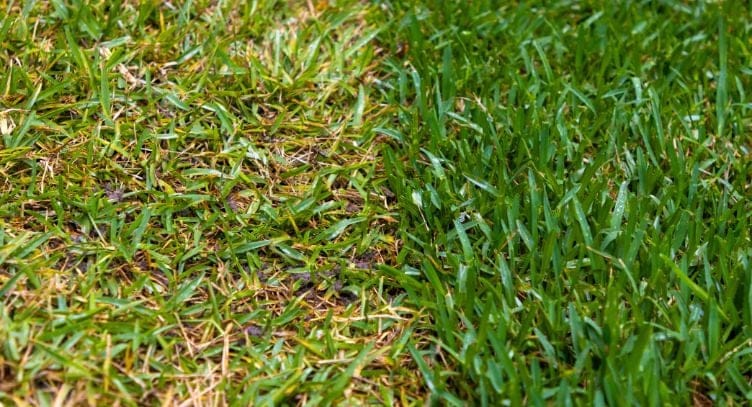
St. Augustine: For residential accounts, this is the grass you likely deal with most often. St. Augustine responds well to high-nitrogen programs, and is also highly prone to iron and manganese deficiency. This is especially true in cases where alkaline irrigation water or high-pH soils are present.
Consider Sunniland 24-2-11 or Dynazone 18-0-9 for primary feeding, supplemented with DynaFlo 15-0-0 6 Iron or Soar Micronutrient Mix between rounds. This combination produces consistently strong results for many residential St. Augustine lawns.
Zoysia: Compared to other turf varieties, Zoysia requires less nitrogen. Moderate nitrogen rates with slow-release products like Sunniland 16-0-8 help keep Zoysia dense and healthy without increasing the risk of thatch build-up from excessive fast-release nitrogen.
Bahia: You’re likely to encounter this variety on larger or lower-budget properties. Sunniland 16-0-8 or a potassium supplement like Earthstrong Harbor K or Milorganite keeps Bahia performing well without the risk of creating thatch build-up from excess nitrogen.
Bermuda: This is one of the most tolerant grass varieties when it comes to nitrogen. Split applications of a product like Dynazone 18-0-9, Turf Apex 28-0-12, or Sunniland 24-2-11 keep Bermuda dense and strong, particularly on sports fields or high-traffic commercial properties.
You’re likely familiar with what NPK stands for, but it’s worthwhile to revisit how these nutrient ratios can impact your fertilizer choices.
Nitrogen (N): Nitrogen is critical for driving shoot growth and producing the lush green color and growth that helps keep customers satisfied. Common nitrogen sources include ammonium sulfate, urea, polymer-coated urea, and sulfur-coated urea. For high-frequency routes, slow-release nitrogen sources can help maintain more consistent results between visits and reduce surge growth. Ultimately, use the nitrogen source that works best for your program, your turf varieties, and your service area.
Phosphorus (P): Phosphorus is essential for root growth, but Florida soils are often already high in phosphorus. Because of this, you may not need to apply it, and in some areas, local regulations restrict or prohibit phosphorus applications on established turf unless a soil test documents a deficiency. Products with a zero in the middle are often preferred, while higher-phosphorus products should only be used when warranted and allowed.
Potassium (K): This nutrient sometimes gets underweighted in commercial programs. Potassium directly supports drought tolerance, disease resistance, and the turf’s ability to recover from mowing and foot-traffic stress. Make sure you’re not missing out on these benefits by using products like Earthstrong Harbor K and Rebound 15-0-30, which make targeted potassium application easy.
As seasons and schedules change, it can be easy to inadvertently make a few mistakes that can really sabotage your otherwise strong turf program.
Avoid these common mistakes to keep your customers happy and save money by not wasting product or risking fines.
Applying nitrogen during blackout periods: Depending on how sprawling your routes are, regulations can differ between clients and municipalities. During summer blackout periods, focus on iron and micronutrient sources such as Soar Micronutrient Mix, Microplex, and Earthstrong IronMan to achieve green-up without applying nitrogen. This helps maintain turf color while staying aligned with local fertilizer restrictions.
Using the same program across different grasses and clients: As clients grow and the time to service them gets shorter, this is an easy trap to fall into for LCOs. But it comes at a cost that could lead to clients canceling their service. Make sure to tailor the fertilizer program to the grass type and specific conditions.
Find the right Nitrogen source: Some operators find that ammonium sulfate works best on their lawns, others prefer Urea-based fertilizers. There is no true answer as to which source is best, so find what works best for you, and what provides the best looking lawns.
Ignoring micronutrient deficiencies: This is most commonly caused by misdiagnosing a yellowing issue as a nitrogen problem. But adding nitrogen without addressing the possible iron or other deficiency just creates more yellow grass. A liquid iron or micronutrient pass is often faster and more cost-effective than a full fertilizer application.
After 40 years in Florida, we’ve learned a few things about which fertilizers work best for commercial lawn care operators.
If you’re looking for the perfect products to service your customers, give us a call at 813-645-4629.
Our experts can guide you toward the best products to solve even your toughest client properties.

If you’re growing Bermuda, St. Augustine, Zoysia, or Bahia grass here in the Tampa Bay area, the question “when should…

Florida’s heat, humidity, and relentless summer storms create the perfect breeding ground for turf pests, making proactive pest control essential…
Most fertilizer advice you find online gives you a generic schedule and calls it a day. Apply every two weeks.…