Fertilizer Rundown: What to Use, When to Apply It, and What NPK Means
Discover the best fertilizer options for Florida lawns, plus guidance on choosing the right products for your lawn care program.


If you’ve ever stood in the fertilizer aisle wondering how often you’re supposed to be feeding your lawn — you’re not alone. It’s one of the most common questions we hear from homeowners, and after 46 years in the turf care business, we’ve seen what happens when lawns are fed right, and what happens when they’re not.
Here’s the straight answer, along with everything you need to know to actually use it.
For warm-season grasses — St. Augustine, Bermuda, Bahia, and Zoysia — we recommend fertilizing every 6 to 8 weeks during the active growing season. In Central and South Florida, that window runs roughly from April through November.
Now, Florida is a unique beast. Unlike most of the country, we rarely freeze (especially Central and Southern Florida, south of I-4). That means your grass is technically never fully dormant — it may slow down in the cooler months, but it’s still ticking. However, fertilizing outside of that April–November window is generally not worth your time or money. If morning temperatures are consistently below 60°F, your grass isn’t growing fast enough to respond the way you want it to.
And if we do get a hard freeze? Don’t apply fertilizer. Period. Wait until the lawn is actively growing again before you feed it.
Before you set up your schedule, check your county ordinances. Florida institutes fertilizer blackout periods during the summer rainy season in many counties, restricting the use of nitrogen and phosphorus fertilizers. These rules exist to protect local waterways, and ignoring them can result in fines. When in doubt, call your local county extension office or ask us — we’re happy to help you stay compliant.
When it comes to fertilizer, our philosophy is simple: granular is king.
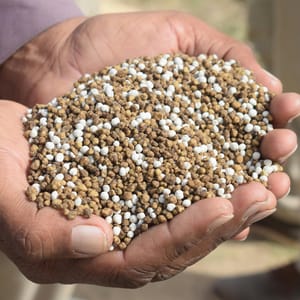
Granular fertilizer gives you the most bang for your buck. It’s easy to apply, it covers ground efficiently, and it feeds the lawn in a way that liquid simply can’t match for regular maintenance. Don’t overthink it — stick with granular as your foundation.
For the product itself, look for a 2:1 nitrogen-to-potassium (N:K) ratio. Good examples include:
These ratios support healthy leaf growth while strengthening the root system — exactly what warm-season grasses need.
Slow-release vs. fast-release? Honestly, this comes down to your personal experience. Both have their place. Try them, observe how your lawn responds, and go with what works for you. There’s no universal right answer here.
What about liquid fertilizers? We recommend those only as a supplement — not a replacement. If you want a quick pop of color and you need it fast, a liquid fertilizer or liquid iron can deliver that visual boost. But for your regular program, stay granular. Take a look at these products as a liquid supplement: DynaGold Iron, Microplex, Soar Micro, and DynaFlo 15-0-0 6 Iron.
In 46 years, if there’s one thing we’ve seen sink more fertilizer applications than anything else, it’s improper watering. You can have the best product in the world, but if you don’t water it in correctly, you’re wasting your time and money.
Here’s the rule:
After applying granular fertilizer, water it in. Get it off the leaf blade and into the soil where the roots can actually use it. Then keep watering properly throughout the weeks that follow.
The general guideline is 1 to 1.5 inches of water per week — but here’s the thing: don’t be a prisoner to that number or to a rigid schedule. Your lawn will tell you when it’s thirsty. Learn to read it.
Signs your lawn needs water:
If you see those signs, water. If Florida’s afternoon rains are rolling through consistently, let that be your irrigation — nothing replaces rain. Over-irrigating is just as damaging as under-irrigating.
This is critical: only fertilize grass that is actively growing.
If your lawn is under drought stress and you don’t have reliable irrigation, hold off on fertilizing. Fertilizer applied to a thirsty, stressed lawn can cause burn — and you won’t get the lush response you’re hoping for. Wait for rain, or make sure your irrigation system is doing its job before you apply.
Here’s something we tell every customer, and it’s the philosophy at the heart of everything we do:
Grass is a living, breathing organism — just like you and me. And just like us, it can get sick.
In turf, “sick” means insects and disease. Florida lawns face tremendous pressure from both. Chinch bugs, grubs, fungal diseases — they can undo weeks of good care in a short time. If your lawn is constantly fighting off pests and pathogens, it’s spending energy on survival instead of growth. Your fertilizer applications will never reach their full potential on a stressed, sick lawn.
Our recommendation: apply a good systemic insecticide/fungicide — like Caravan G — every quarter. It takes the pressure off the grass and creates an environment where your fertilizer can actually do what it’s supposed to do. Think of it as the foundation that makes everything else work better.
Here’s a straightforward framework for a Florida lawn fertilizer schedule:
Month |
Action |
|---|---|
April |
First fertilizer application of the season (check county ordinances) |
Late May / Early June |
Second application |
Summer Rainy Season |
Check local fertilizer ban dates before applying |
August |
Resume applications as allowed |
October |
Application |
November |
Final application before growth slows |
Apply preventative insecticide/fungicide (like Caravan G) once per quarter throughout the year.
Setting up a solid fertilizer program doesn’t have to be complicated — but it does take the right products and a little know-how. Whether you’re a first-time homeowner or you’ve been maintaining your lawn for years, we’re here to point you in the right direction.
Browse our online store for granular fertilizers, slow-release options, liquid irons, and preventative treatments for your specific grass type. Have questions about your lawn or which product is right for you? Give us a call or stop by the store — we love talking turf, and there’s no question too small.
After 46 years, helping homeowners get their lawns right is what we do.

Discover the best fertilizer options for Florida lawns, plus guidance on choosing the right products for your lawn care program.
If you’re growing Bermuda, St. Augustine, Zoysia, or Bahia grass here in the Tampa Bay area, the question “when should…
Florida’s heat, humidity, and relentless summer storms create the perfect breeding ground for turf pests, making proactive pest control essential…