Your Essential Guide to Turf Care: Transitioning from Winter to Spring
Preparing your Florida lawn for spring is the key to a lush, healthy turf all summer long.

If you’ve lived in Florida long enough, you’ve no doubt had at least one run-in with fire ants. Unlike most lawn-related pests that are mostly a nuisance that harm the beauty of your property, fire ants can be harmful to you and your family.
These ants can deliver a potent sting while you’re gardening or simply enjoying your lawn on a Sunday afternoon.
Being able to quickly identify fire ant mounds and eliminate them is a skill every Florida homeowner should have in their lawn care toolkit. Below, we’ll explain how to identify fire ant mounds in a Florida yard quickly and the best ways to eliminate them to keep your lawn and family safe.
Like many of the worst lawn pests that we deal with, fire ants are not native to Florida. After arriving via South American cargo ships in the 1930s, they quickly spread throughout the Southern United States and ultimately took root in Florida.
The main problem with fire ants is that they’re extremely aggressive when they sense a threat to their colony. The ants will crawl on an unsuspecting victim, and when a sufficient number are present, they all can begin stinging at once.
Beyond just being harmful to people, animals, and lawns, fire ants have been known to damage infrastructure like electrical equipment or AC units.
The best way to avoid fire ant problems is to learn how to identify them early, before there’s an infestation. The most common mistake homeowners make is thinking fire ants are just regular native ants. When fire ants are young, their appearance and mounds can resemble those of native ant species.
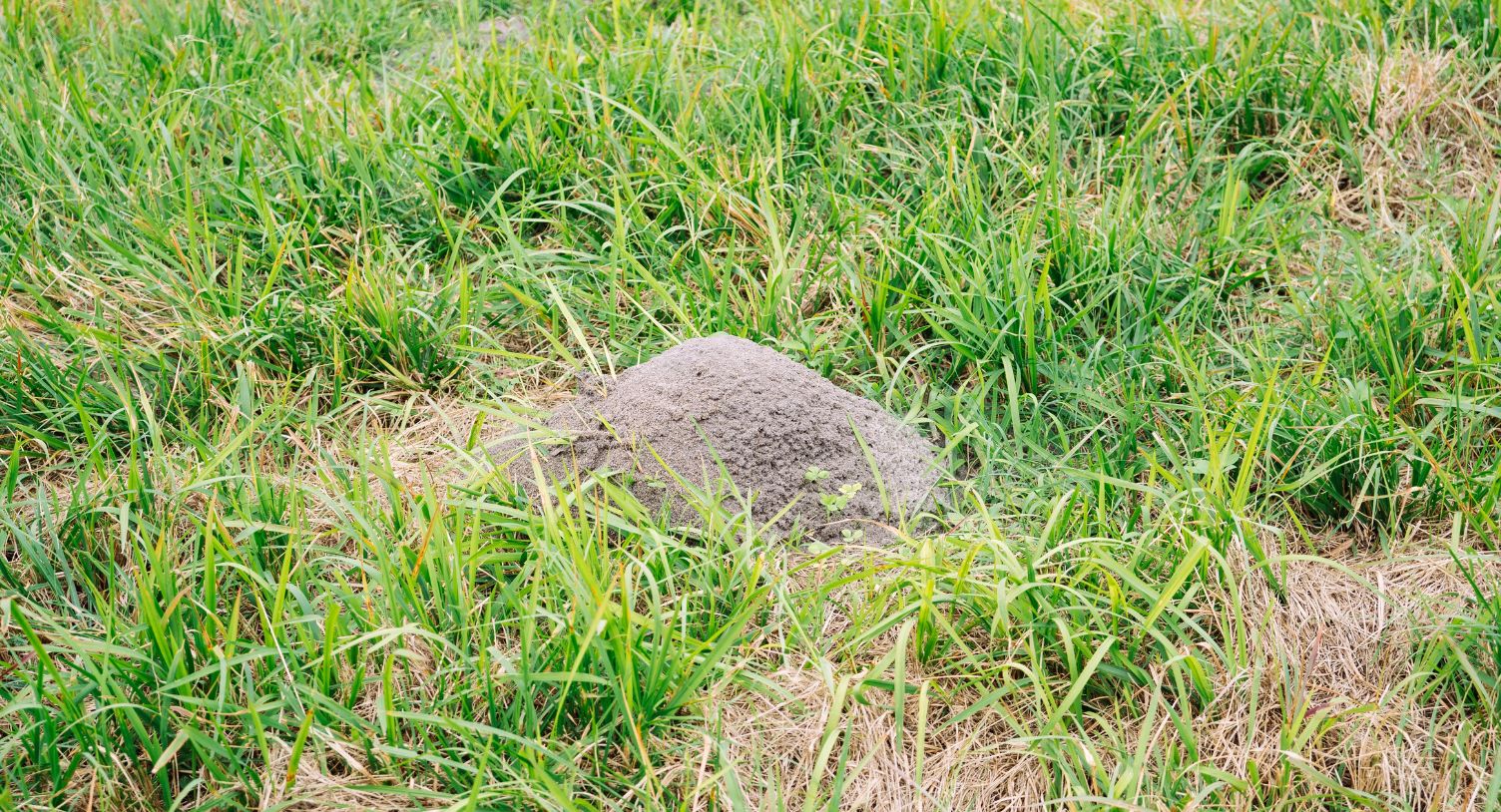
Fire ant mounds will appear dome-shaped and be made of loose, almost fluffy soil. There is also no central opening to the mound, unlike many other ant species. If you damage the mounds during mowing or other landscaping activities, you’ll notice small white objects inside, which are the eggs, larvae, and pupae of developing fire ants.
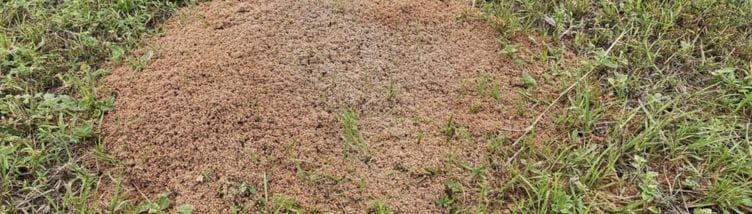
In residential settings, the mounds are usually just a few inches in diameter, but left unchecked, they can grow to over a foot in diameter and height. You’ll most commonly see fire ant mounds in sunny areas of your lawn, since the ants tend to like the warmest areas they can find.
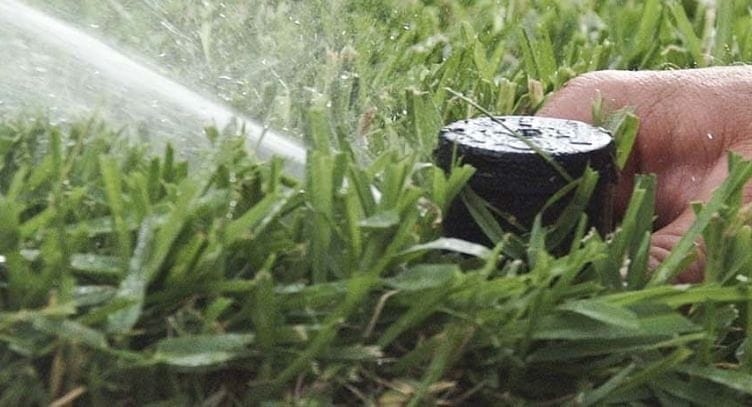
Where to look for fire ant mounds: Keep an eye out around sidewalk borders, driveways, foundation walls, and around sprinkler heads or other moist areas. This will be where the fire ant mounds will be easiest to spot.
When to look for fire ant mounds: After a heavy rain, colonies will often start relocating and building new mounds to expand. After a good rainfall, take a walk around the lawn to spot any fire ant activity.
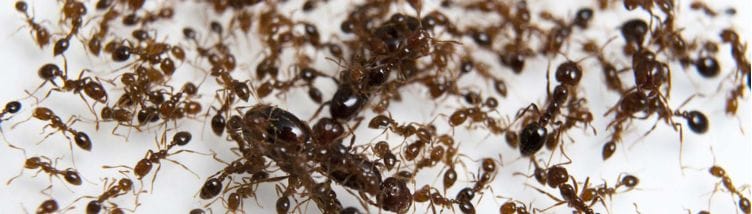
Another tell-tale sign of fire ant mounds is that the ants themselves vary in size. Most ant species are uniform in size, but fire ants have a good deal of variety within the same colony.
Just going after the fire ant mounds is a common mistake Florida homeowners make. You can think of the mounds like the tip of an iceberg above the ocean surface. Below the surface of your lawn is a complex tunnel structure that the ants use for movement and to protect the queen. Disturbing the mounds will have almost no effect on the colony and can sometimes cause them to spread faster.
To treat fire ants, you’ll need to target the queen. This is done by introducing chemicals or organic products that worker ants then bring into the colony network.
Chemical or insecticide treatments will provide the fastest results when eliminating fire ant mounds. You have the option of using products designed for spot treatment of each mound or a broadcast treatment, which uses a bait that the ants pick up and carry back to the colony network.
Individual mound treatments can come in either liquid or powder varieties. In Florida, the liquid treatments tend to work better as the powder products will get washed away after rainfall.
Products containing ingredients like bifenthrin, fipronil, or acephate can eliminate a colony within 24-48 hours when used properly. An effective treatment plan would be rotating Bi-Dash Specialty, Demon Max, Bidy, and Zone Plus.
These direct mound treatments are best for localized fire ant mounds that are detected early. For more widespread infestations across your entire property, you can consider broadcast baits. These products are spread across your lawn, similar to a fertilizer application.
The ants then carry the bait along with an insecticide back to the colony. This method works best for larger infestations spanning across your lawn, but the results take longer.
There are several natural methods you can try to eliminate fire ant mounds. These can work on small areas if the ants are detected very early.
Boiling water: This is one of the oldest methods for dealing with fire ants, and it involves pouring boiling water directly into the mound. This requires at least 3 gallons of water per mound, but it can also damage many Florida grasses, such as St. Augustine, due to heat stress.
Diatomaceous earth: This substance is commonly used to deal with a variety of insects. The natural powder damages the ants’ exoskeleton, causing dehydration. It’s safe for pets and kids, but will need to be reapplied to the mounds after each rainfall, which can be difficult in Florida.
Beneficial nematodes: These microscopic worms parasitize fire ant larvae and can reduce populations over time. We can supply beneficial nematodes, so if this non-chemical treatment is the right option for you, contact us! Please keep in mind that they often won’t eliminate established colonies, and that repeated applications are needed for the best results.
While natural methods can work to eliminate fire ant mounds, they take much more patience. Larger or more established fire ant populations are likely to be too resilient for most natural fire ant elimination methods.
If you plan on trying these natural methods, you need to spot the fire ants as early as possible to have a better chance of success.
As with almost every Florida lawn pest, prevention is time and money well spent compared to dealing with a large infestation.
The good news is that prevention is relatively simple, and it’s part of an overall strategy that will help your lawn stay vibrant and healthy.
Walk around your lawn weekly and look for the tell-tale mounds we described earlier in the article. Check around sunny areas or near sidewalks, driveways, sprinklers, and foundations. Pay close attention after heavy rains, as this is when fire ant colonies are most active and easy to spot.
Spotting fire ants early means you can spot treat and use the least amount of chemicals as possible.
Most Florida grasses, like St. Augustine, are dense when properly maintained. Dense, thick grass makes it harder for fire ants to build mounds and spread their colony. Leaving patches of thin grass can invite fire ants to take hold and start building out.
Many homeowners may be feeding fire ants without realizing it, which creates an attraction for them to stay on your lawn. Things like leaky sprinkler heads, poor drainage, pet food, or exposed compost can all attract fire ants looking for an easy place to set up a colony.
Fire ants can be a serious problem if the colonies grow beyond a certain threshold. In some cases, you may need professional assistance to deal with them safely and without harming the rest of your lawn.
At Council Oxford, we help homeowners deal with some of Florida’s worst pests, and that includes fire ant infestations of all sizes.
If you’re just noticing fire ant mounds or your previous attempts at elimination have failed, contact our Florida lawn care experts today. We can help you develop a safe, effective, and fast-acting game plan to rid your lawn of fire ants and keep your family safe.

Preparing your Florida lawn for spring is the key to a lush, healthy turf all summer long.
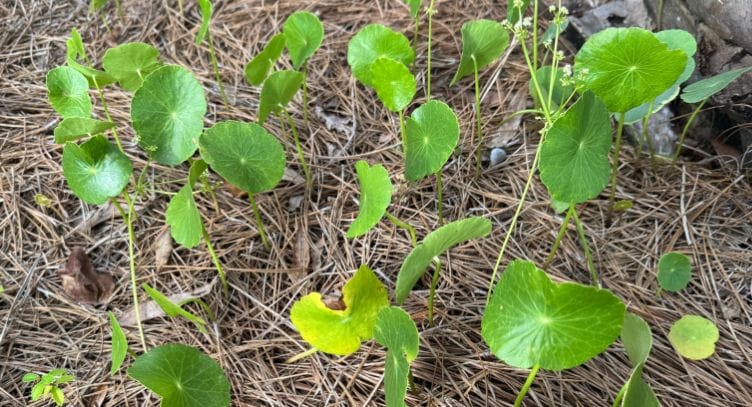
Dollarweed is one of the most common and frustrating weeds Florida homeowners face—especially in St. Augustine grass. Learn how to…
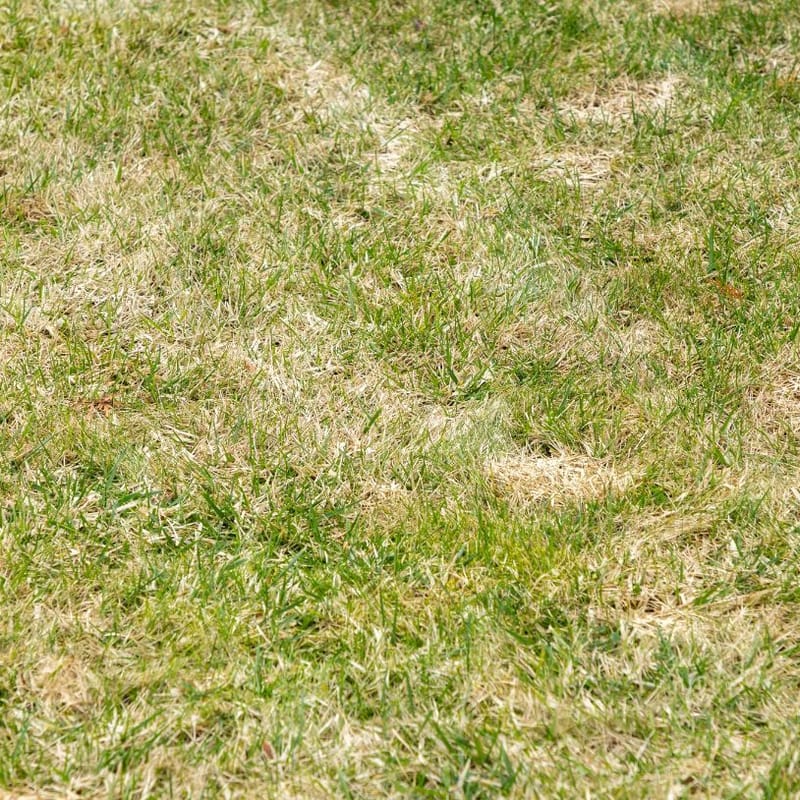
St. Augustine grass is one of the most popular grasses among Florida homeowners. Its lush carpet-like feel and adaptation to…