
Fertilizer Rundown: What to Use, When to Apply It, and What NPK Means
Discover the best fertilizer options for Florida lawns, plus guidance on choosing the right products for your lawn care program.

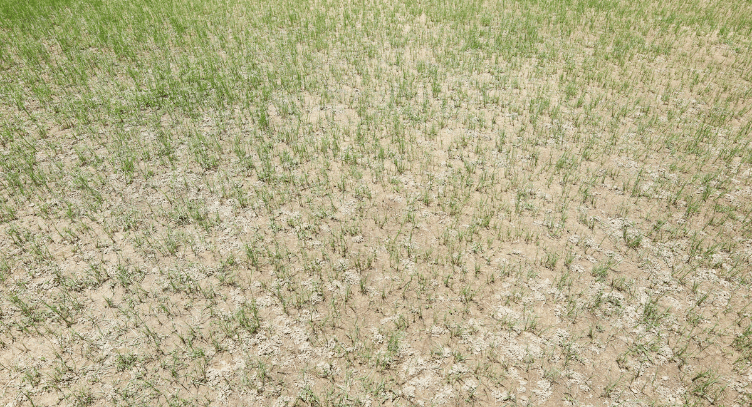
While Florida has a reputation for being lush and green, it’s one of the most challenging parts of the country when it comes to lawn care. Between the high temperatures, unpredictable rainfall, and the unique requirements of warm-season grasses, it can all become quite a chore.
The result is that homeowners can quickly begin to miss certain signs of stress among all of the other maintenance requirements of their lawn. One common area often missed is when a lawn is under drought stress.
Unfortunately, missing the signs of drought stress can lead to more damage to your lawn, which can take much longer to repair than if caught early.
Below, we’ll list the 5 signs your Florida lawn is suffering from drought stress. You can easily spot these issues during a brief walkaround of your property, and they can save you and your grass from unnecessary stress.
In short, drought stress occurs when your lawn isn’t receiving enough water to support healthy root function and growth. Even in the wet climate of Florida, this can happen when storms miss your area, when gaps in your irrigation system leave areas dry, or even when a long stretch of high heat strips moisture from the soil.
Because of Florida’s primarily sandy soil, fast drainage exacerbates the problem. An afternoon rainfall can drain right past the root zone by the time the heat of the next day comes around, leaving your grass vulnerable.
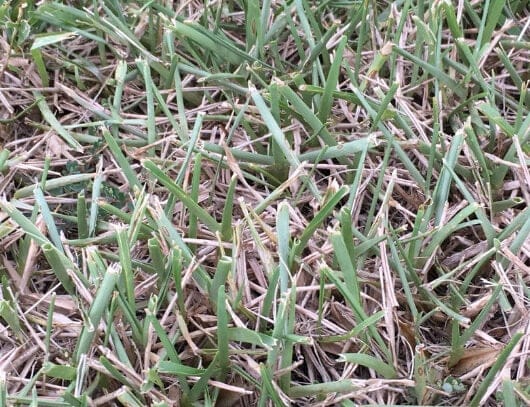
The most obvious sign of drought stress is grass that’s turning brown or taking on a bleached, straw-like appearance. This seems obvious enough, but in Florida, browning grass doesn’t always mean the same thing.
In Florida, browning can also be caused by chinch bug damage, fungal diseases, or over-fertilization. The key difference to look for with drought stress is a more uniform browning across the turf instead of small areas. The blades will also feel dry and brittle to the touch during drought stress.
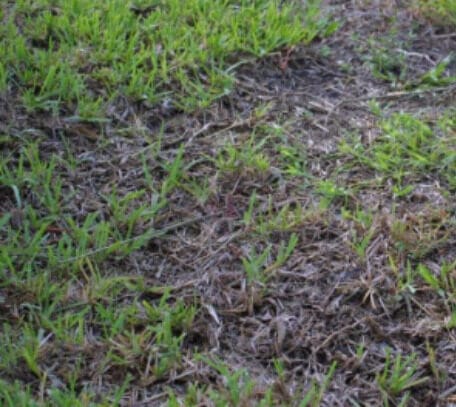
Pest and fungal issues that cause browning will generally start in patches before moving on to larger areas. Just be aware that in some cases, incomplete irrigation coverage can sometimes cause patchy drought stress.
Here’s another tip. St. Augustine grass will begin to show a bluish-gray tint before full browning starts to set in, which is an early warning sign you shouldn’t ignore.
Grass suffering from drought stress will slow its growth to conserve energy and moisture. If you notice you have to mow less often, or that areas are becoming thin, it could be an early sign of drought stress.
However, this is more than just a cosmetic issue, as thinning grass opens the door to pests and weeds. Weeds like spurge are extremely aggressive in Florida lawns and will quickly take advantage of any bare or weakened spots left by drought-stressed turf.
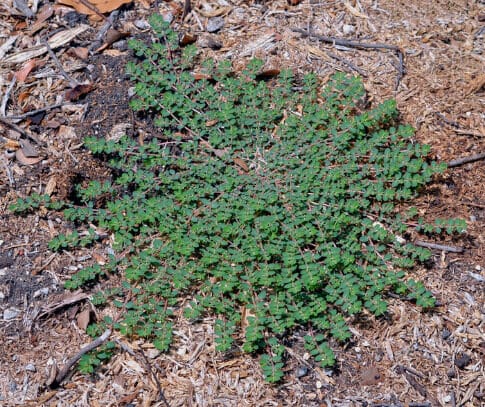
This is one of those situations where a simple turf issue can quickly snowball into a major problem. Your turf should have a lush, thick appearance. If you can see down to the soil or growth has slowed, you have a problem that needs attention.
Depending on the landscaping or property configuration, some Florida homeowners may rarely walk on their grass. But here’s a quick test for drought stress that only takes a few seconds.
Walk across your lawn and look back at your footprints. The grass should start to spring back to its original shape within a few seconds. If your footprint lasts for more than a minute, it means the blades are suffering from drought stress.
The reason is that adequate water allows the cells within the grass to remain plump and springy. This gives the blades their resilience and allows them to snap back to their original shape.
It’s best to perform this test in the morning, before the afternoon heat. It’s also a sign that usually appears before browning, so it’s a great early indicator that can help save your lawn from further damage.
Florida’s sandy soils drain well, but during extended dry periods, even sand can become hard and hydrophobic. This means the soil actually starts to repel water instead of absorbing it.
A sign to look out for is cracks on the surface of the soil. In Florida’s sandy soil, you’ll notice these cracks when looking through the grass blades, specifically in areas with more clay-like compositions found in older neighborhoods.
Another sign is that when you run the irrigation system, you notice puddles or water running off the surface instead of being absorbed.
A quick field test you can do is to push a screwdriver into your soil. If it offers increasing resistance before hitting two inches of depth, the soil’s moisture level is likely critically low.
In these cases, aerating is sometimes necessary in addition to fixing the original irrigation issue.
Strong turf has a natural resistance to invaders. Weeds and pests thrive on weak lawns, where this natural resistance is missing, and they can quickly take hold.
A common pest in Florida is chinch bugs, particularly in St. Augustine lawns. They extract moisture from grass blades and inject a toxin that kills turf. More importantly, they prefer hot, dry conditions. This means drought-stressed lawns create the perfect environment for chinch bug populations to explode.
But be careful. Chinch bug damage can often mimic drought stress. This can lead to homeowners increasing their watering schedule, but without addressing the chinch bug infestation, this can lead to even more problems.
As for weeds, drought stress creates thin patches in your turf that allow opportunistic weeds to germinate and establish a foothold. Florida’s mild winters mean weeds have a longer growing season to exploit these weaknesses.
A thick, healthy lawn is always your best natural defense against weed pressure.
If you’re noticing an uptick in weed growth or grass blades with irregular edges, which is a common sign of chinch bug damage, you may want to contact a lawn care professional.
Pest and weed infestations can quickly get out of control. The longer they go without treatment, the harder they are to deal with. Addressing these issues early will almost certainly save you time and frustration in the long run.
Many homeowners take pride in maintaining their own lawns, and mild Florida drought stress can often be remedied by adjusting their irrigation schedules.
Usually, this means watering more deeply, but less frequently. Generally, you want to water to a depth of 1.5 inches a week for stronger roots that can access moisture lower in the soil profile.
If you’ve already made irrigation changes and haven’t seen an improvement, it may be a sign of a deeper problem that requires professional assistance.
Signs of pests or weeds almost always mean you should seek professional assistance. This is a sign you may have more than one issue present, and tackling these problems in the wrong way or the wrong order can make your lawn start to deteriorate even faster.
But there’s no need to panic if your Florida lawn is suffering from possible drought stress. At Council Oxford, we’ve been helping homeowners, pest control operators, and lawn care operators maintain perfect lawns for over 40 years.
As Florida natives, our experts understand the soil and turf here, and they can quickly identify any issue with your lawn to help you bring it back to the lush, dense appearance that makes your property glow.
Contact us today if you feel your lawn may be suffering from drought stress. We can put together a plan that addresses the root causes immediately to prevent further damage or complications that can threaten your turf.

Discover the best fertilizer options for Florida lawns, plus guidance on choosing the right products for your lawn care program.
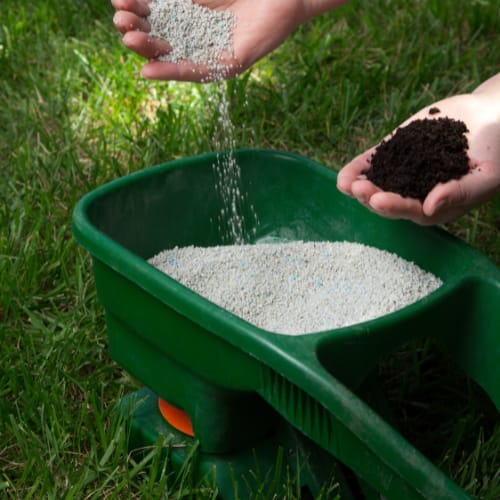
If you’re growing Bermuda, St. Augustine, Zoysia, or Bahia grass here in the Tampa Bay area, the question “when should…
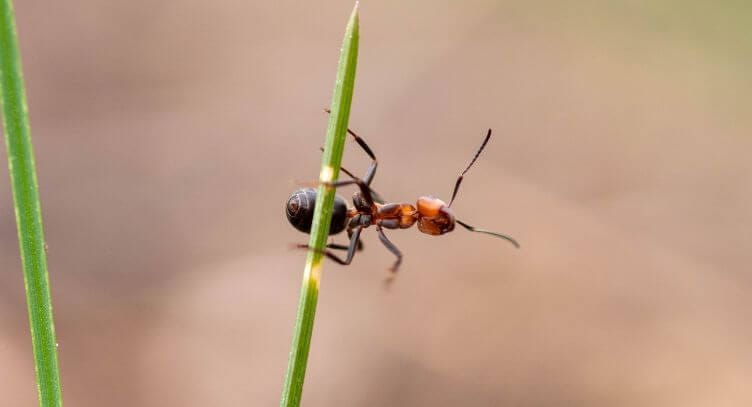
Florida’s heat, humidity, and relentless summer storms create the perfect breeding ground for turf pests, making proactive pest control essential…